
 August 21, 2024 - BY Admin
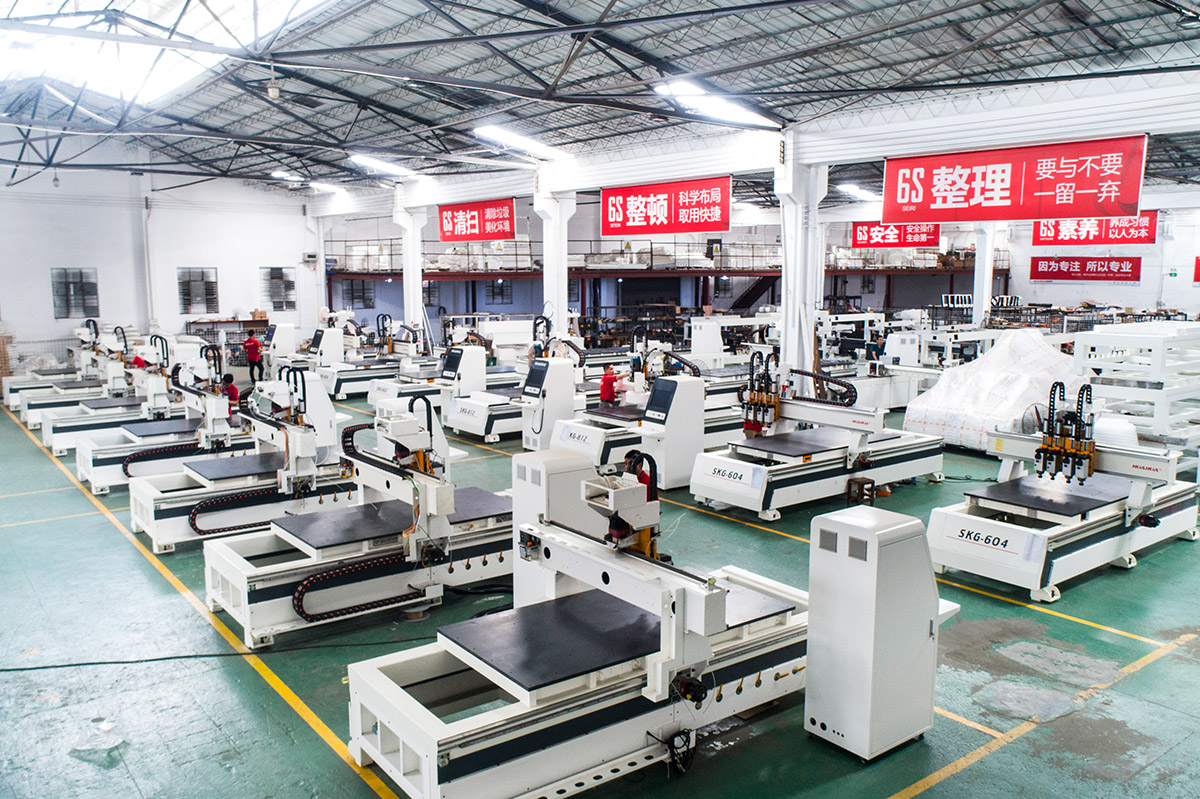
CNC routers have revolutionized the way individuals and industries create and produce by significantly enhancing efficiency beyond what was previously possible. But what exactly is a CNC router, and how does it function? Here's an overview to help you understand the fundamental mechanisms of CNC routers.
Definition
CNC routers are machines designed to cut various materials, including wood, plastic, aluminum, and high-density foam. The term "CNC" stands for computer numerical control, meaning these machines are operated by computer software and electronics rather than by direct human intervention
CNC machines typically operate along three axes: X, Y, and Z. The X-axis, often the longest, moves front to back, while the Y-axis handles left-to-right movement, and the Z-axis controls the up-and-down direction. Since they are computer-controlled, CNC routers offer greater speed and precision than manual operation, making them invaluable in manufacturing.
Components Spindle
The spindle is the component responsible for cutting. It is attached to the end of the robotic framework that allows it to move. The spindle rotates its cutting bit at varying speeds, depending on the material being worked on. Softer materials typically require higher revolutions per minute (RPM), while more complex materials are cut at slower speeds.
Cutting Bed
The cutting bed is the flat surface where the CNC router operates. It’s where the user places the materials to be cut. The operator can secure the material to the cutting bed using screws, adhesives, clamps, or bolts in T-slot deck variants, or by utilizing vacuum suction mechanisms available on various CNC tools. This ensures that the material remains stationary during the cutting process.
Drive Systems
Drive systems include the components that enable the router to move along each of the three axes, with a dedicated system for each direction. Each drive system comprises a motor, a guiding or bearing system along which the router travels, and a mechanism for movement. Typically, this movement is facilitated by either a ball or lead screw system or a rack and pinion setup.
CNC Controller and Computer
The CNC controller, often referred to as the "brains" of the machine, works in conjunction with a computer to direct its operations. A person can first create cutting designs on the computer using specialized software. These designs are then communicated to the CNC controller via a post-processor, which translates the design file (CAD) into g-code for machining. The CNC controller then activates the drive systems to execute the task.
For anyone seeking an advanced design and production solution, CNC machines offer unmatched precision, versatility, and productivity. If you're looking for a CNC cutting machine, HUAHUA is your ideal choice. We offer a range of reliable CNC routers in various sizes to meet your specific needs.